Coffee With Tanya #37
Dumb phones revival, longevity science, subscription fatigue, analog film, fermentation's comeback, and the internet turning 37. March in a cup.
Hello coffee lovers! ☕
March has been one of the hardest months I've had in a long time.
The war with Iran changed something. Not just out there, in the news, in the noise , but in here. In the way mornings feel. In the weight behind ordinary conversations. In the strange guilt of trying to focus on work while something enormous is happening around you.
And yet.
In the middle of all that turbulence, I signed a contract with a new client. A new direction. A new adventure I'm not quite ready to talk about yet, but I will soon, and I think you'll find it interesting.
Viktor Frankl wrote something I keep coming back to:
"Everything can be taken from a man but one thing: the last of the human freedoms - to choose one's attitude in any given set of circumstances, to choose one's own way."
That's been my compass this month. Choosing, even when you can't control. Moving, even when it's hard to see clearly.
So I'm here, coffee in hand, grateful for this small ritual we share.
Here's what's brewing on this month's menu:
- History - The internet turns 37: what Berners-Lee actually imagined 🌐
- Tech - The dumb phone revival: when silence becomes luxury 📱
- Innovation - The longevity boom: can we actually slow down aging? 💡
- Business - Subscription fatigue: when customers finally say "enough" 🏢
- Art - Analog photography's quiet comeback 🎨
- Food & Drink - The fermentation revolution 🍞
- Word Bites - Querencia 📖
- March in History 🌍
The Internet at 37: Berners-Lee Memo 🌐
Today's edition number is 37, and I couldn't plan it better than this month, the internet turned 37!! So here are some interesting historical facts about when and where it all began...
On March 12, 1989, a 33-year-old British scientist at CERN submitted a memo to his supervisor.
Title: "Information Management: A Proposal." (full 20-page doc is here).
His supervisor wrote back on the cover page: "Vague but exciting." 🤔
That memo became the World Wide Web.
First lesson, keep it simple, don't overcomplicate headlines and titles 😂
The doc is short, humble, and contains a vision so clean it almost hurts to compare it to what the web actually became.
Berners-Lee wanted a system for scientists to share research. Documents that could link to other documents. Accessible by anyone with a connection. No central authority. No hierarchy. His founding philosophy was so simple it barely needed stating:
Information belongs to everyone.
He chose not to patent it. He gave it to the world for free. No conditions.
Within a decade, the web had email, e-commerce, search, streaming, Wikipedia, forums, communities, journalism, art, science... more human knowledge in one place than at any point in history.
A 33-year-old's diagram on a whiteboard at a physics lab had become the connective tissue of modern civilization.
And then.
Disinformation at scale. Surveillance capitalism. Monopolistic platforms that vacuum up attention and sell it back as ads. Algorithmic radicalization. The attention economy. The loneliness of infinite connection.
In a letter on the web's 30th birthday, Berners-Lee himself named three dysfunctions eating the thing he built: deliberate malicious intent, platform design that creates perverse incentives, and the emergent consequences of good ideas grown too large too fast.
He didn't say he regretted it. But he did say we need to fight to reclaim what it was supposed to be.
There's something quietly heartbreaking about a person who gives the world a gift, watches it become almost unrecognizable, and still believes it can be steered back toward its original intention.
Vague but exciting, his supervisor wrote 😂
Thirty-seven years later - still both.
The Dumb Phone Revival📱
96 times.
That's how many times the average person unlocks their phone every single day.
Not to call someone. Not to send something important. Just... to check. To tap. To scroll for 30 seconds and put it down again, already forgetting what you were looking for.
A friend of mine, a product manager at a tech company, someone who literally builds apps for a living, pulled out her new phone recently. I expected a flagship. Instead: a basic Nokia 🤯 (I didn't know they still exist). Calls. Texts. That's it. No Instagram. No notifications. No endless feed of everything.
She wasn't making a statement.
She was just... done.
Turns out, she's not alone. Sales of "dumb phones" have been quietly surging. The Light Phone II has a waiting list. HMD (Nokia's revival brand) is reporting numbers they haven't seen in years. And the fastest-growing demographic? People aged 18-35. The generation that grew up on smartphones is choosing to leave them.
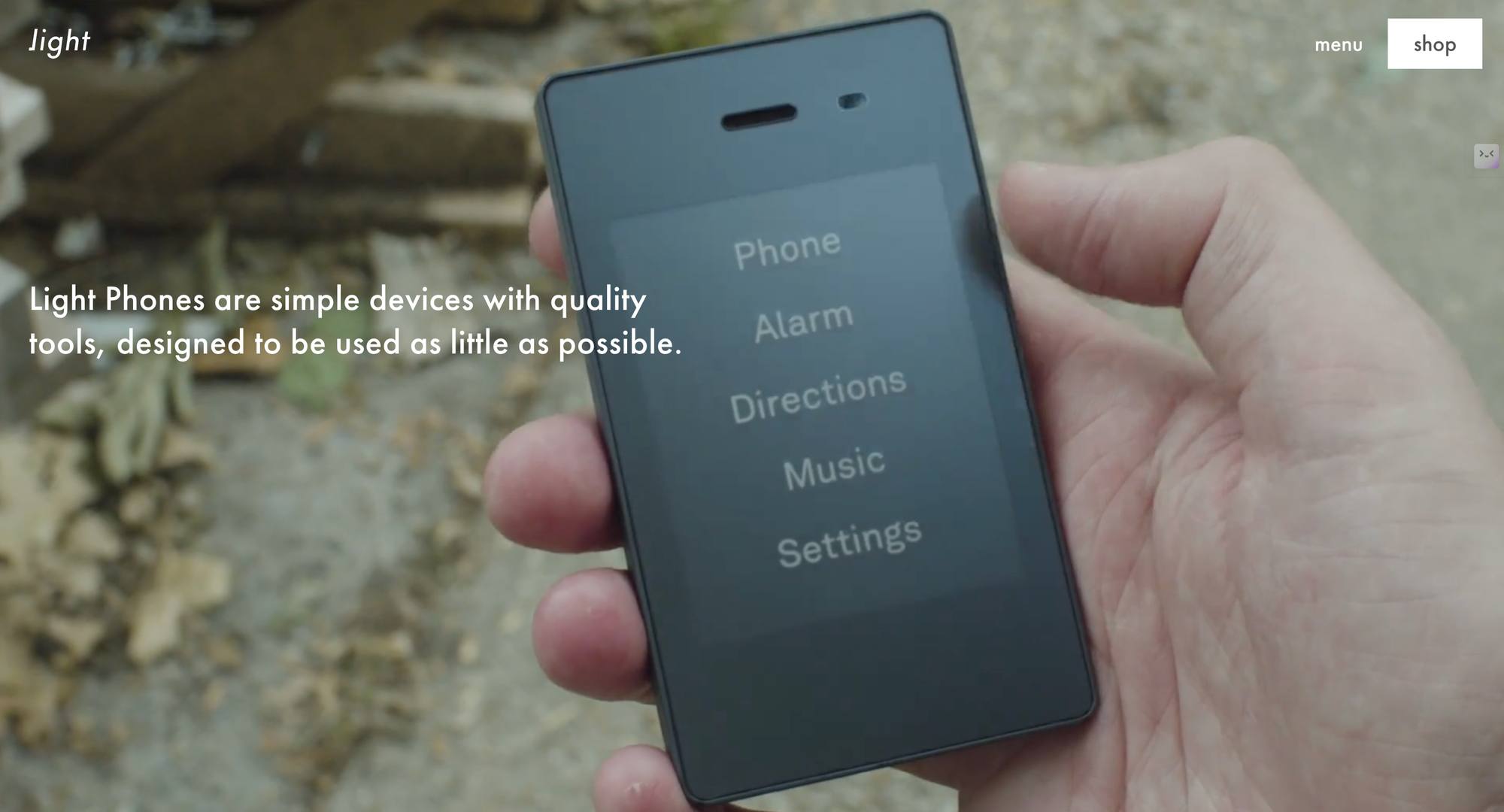
There's a status shift happening here that's worth paying attention to. Being unreachable is becoming aspirational. The person without WhatsApp notifications, without the red dots and the dopamine loops, that person seems to have somewhere more important to be.
Silence, in 2026, is a luxury.
I've done versions of this myself. Phone-free mornings. No notifications. Deleted apps. The dumb phone is just the extreme end of a spectrum that more and more people are quietly moving toward.
The most interesting design challenge in tech right now isn't building something more addictive.
It's building something that knows when to disappear.
The Longevity Boom 🧬
Bryan Johnson spends $2 million a year trying not to die.
He tracks 70+ biomarkers daily. Follows a strict vegan protocol. Goes to bed at the same time every night down to the minute. And injected himself with his teenage son's plasma in an attempt to "transfuse" youth 🤯.
He is an extreme example. He is also pointing at something real.
Billions of dollars are now flowing into longevity science. Altos Labs, backed by Jeff Bezos, is trying to reprogram human cells to reverse aging. Google's Calico is mapping the molecular mechanisms of why we die.
The fundamental shift? For most of human history, aging was treated like weather, inevitable, background, just what happens. Now a growing number of researchers are treating it like a disease. One that might be slowed. Maybe paused. Possibly, in small ways, reversed.
This episode of Huberman Lab is a good place to start if you want to go deeper on the actual biology.
Here's the question nobody wants to answer out loud, though: Who gets access to this?
If longevity becomes a product it will be the most unequal one in history. The people who already live longer (due to income, healthcare, geography) would live even longer. And then there's the stranger question underneath that: what does a society actually do with people who don't die?
But I do find myself paying more attention to sleep, to stress, to how I move. Not for immortality. Just for more good years (and no back pains).
Maybe that's what the longevity boom is really selling: the feeling that the clock isn't completely out of your hands.
Subscription Fatigue 🏢
Quick exercise. How many subscriptions are you currently paying for?
When was the last tiem you checked this?
Take a moment. Actually try to count.
Most people I ask get to 8 or 9 before they go quiet, realizing they've forgotten at least two. Netflix. Spotify. A cloud backup. Software. A news site. That meal kit from 2023. Another software. The app that auto-renews every October because you signed up during a free trial and never quite got around to cancelling.
The average American now spends over $900 a year on subscriptions and underestimates it by roughly 80%.
The subscription model was, for a while, genuinely good for everyone. Consumers got access without ownership. Businesses got predictable recurring revenue. Then it spread to everything including places it had absolutely no business being.
BMW tried to charge a monthly fee for heated seats. Seats already in the car you already bought. Peloton charged you to use the bike sitting in your living room. Printers now require ink subscriptions (say what?!). Car manufacturers are adding subscriptions for features that used to just... come with the car.
The backlash was inevitable. And it's here.
What's emerging in response is something interesting: "pay once, own forever" is quietly becoming a selling point again. Apps like Craft and Obsidian are gaining users specifically because they offer lifetime licenses. The indie software world is leaning into this hard and it's working.
The irony is rich. Subscription fatigue might actually be the best thing that ever happened to small, independent builders who never needed VC-funded growth to survive.
Now... Take a moment to review your active subscriptions across the Apple App Store, Google Play, and PayPal. Be sure to cancel any recurring annual plans you no longer use to avoid unnecessary charges.
And thank me later!!
Analog Photography's Quiet Comeback 🎨
You have 36 shots. 📸
That's it. When the roll is done, it's done. There's no deleting the bad ones, no adjusting exposure in post, no comparing versions. You won't even see the results for a week.
In an era of AI-generated images and smartphones with cameras so good they make professional gear nervous, this is the format people are choosing.
Film cameras are selling out. Kodak brought back stocks it had discontinued. Fujifilm can't keep Instax in supply. Darkroom workshops in Tel Aviv, New York, and London are booked months out, and the waitlists are dominated by people under 30 who have never shot film before.
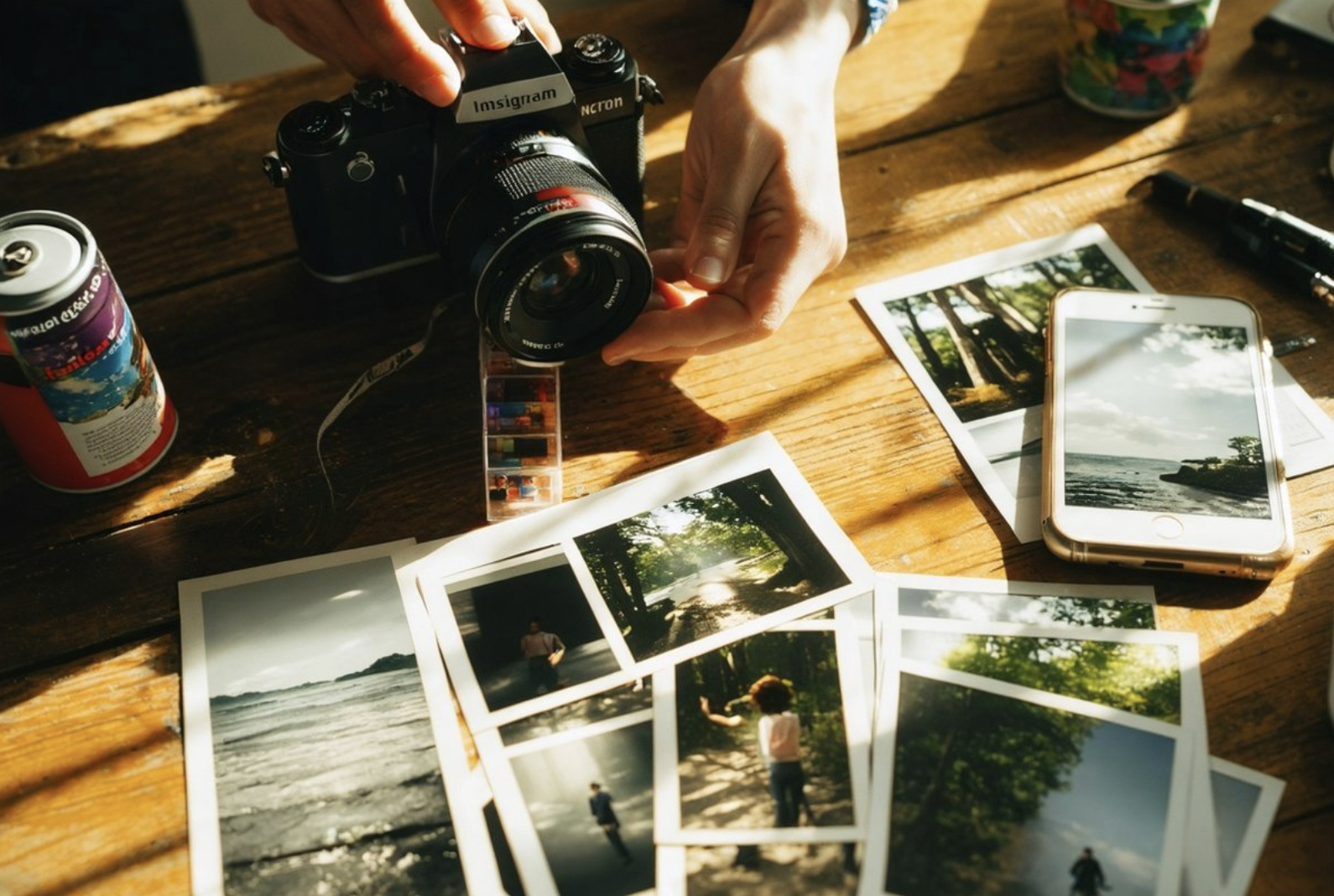
This isn't nostalgia. These aren't people recreating a childhood memory. This is a generation raised on infinite, instant, filterless perfection... choosing its opposite.
The friction is the point.
When you have 36 frames, you slow down. You look before you press. You accept the blur, the accidental double exposure, the slightly wrong color temperature, and you realize those are sometimes the best shots.
There's something deeply clarifying about making a choice you can't take back.
You pause...
In product and design, we often talk about how removing friction improves experience. But there's a kind of friction that creates experience. The resistance that makes you pay attention.
Analog photography is that.
Every shot is a small commitment. And commitment, it turns out, is something people are hungry for.
The Fermentation Revolution 🍞
My mother makes her own fermented cabbage and other veggies every month.
Big glass jar. Warm corner of the kitchen. Left for 5-7 days. At the beginning, she didn't call it "fermentation" or a "probiotic protocol." She just called it food.
Very delicious food!
Then somewhere along the way, people stopped. Shelf-stable replaced handmade. We traded the ancient chemistry of controlled rot for packaging that lasts three years and a fridge full of things that never die.
Now we want it back. Badly.
- Sourdough took over the pandemic.
- Kimchi went from Korean staple to global obsession.
- Kombucha is a $7 billion industry.
- Kefir, miso, tempeh, sauerkraut ,once niche or "ethnic", are mainstream.
My local Tel Aviv supermarket has an entire fermentation section that didn't exist five years ago. The craft fermenting community online is enormous, nerdy, and deeply serious. Just look at this thread.
And the science is backing it up in ways that feel genuinely important.
A 2021 Stanford study found that a diet high in fermented foods measurably increased gut microbiome diversity and reduced inflammation markers, outperforming even a high-fiber diet on those specific measures. The gut-brain-immune connection research of the last decade has been quietly revelatory: the health of your gut bacteria is linked to immunity, mood, cognitive function, and more.
But here's what strikes me most: every culture that developed before refrigeration figured this out independently. Korea had kimchi. Germany had sauerkraut. The Middle East had labneh. India had idli and dosa. Japan had miso and natto.
We didn't discover fermentation.
We just forgot it for a while. And now, we're remembering.
Have you ever experienced fermentation? Reply or comment!

Word Bites! 📚✨
Querencia (Spanish)
A place or a feeling ,where you are most fully yourself. Where you draw your strength from. Not just "home," but the specific corner of the world, or the specific state of being, that holds you when everything else is turbulent.
Some people find their querencia in a city. Some in a ritual. Some in a person. Some in silence. This month especially, I've been thinking about what mine is.
March in History 🌍
- March 7, 1953 - Watson and Crick crack the DNA code 🧬 In a Cambridge lab, James Watson and Francis Crick assemble a cardboard and metal model of the double helix. They discover the chemical "language" that instructs all living things how to grow and function.
- March 10, 1876 - The first telephone call 📞 Alexander Graham Bell calls his assistant Thomas Watson from the next room and says: "Mr. Watson, come here, I want to see you." The world starts shrinking.
- March 20, 1602 - The Dutch East India Company is founded 📈 The VOC becomes the world's first multinational corporation, and the first to issue shares to the public. The birth of the stock market, and in many ways, of modern capitalism.
- March 26, 1953 - Jonas Salk announces the cure 💉 After years of global fear, Dr. Salk reveals his successful polio vaccine. He famously refuses to patent it, asking "Could you patent the sun?", leading to the near-eradication of the disease.
- March 31, 1889 - The Eiffel Tower opens 🗼 Parisians largely hated it. Called it an eyesore, a "metal asparagus." It was supposed to be demolished after 20 years. It became the most visited monument on Earth.
Recommendations 🌟
What I'm watching / reading / listening to this month:
🎧 Listening – 1940’s Retro Jazz
Old-school charm with timeless swing.Smooth brass, warm vinyl textures, and that late-night glow, perfect for slowing things down and slipping into a different era.
📺 Series – Love Story
Soft, emotional storytelling that leans into connection and vulnerability.
A gentle watch when you’re in the mood for something heartfelt and human.
📺 Series – The Dinosaurs
Unexpectedly fun and a little offbeat. Light, quirky, and easy to dip into when you want something entertaining without overthinking it.
Wrap-Up
That's all for this month. A hard one. A real one. One I'm glad is almost over, and also strangely glad I lived through.
New contracts. New adventures ahead. I'll tell you more when the time is right.
Until then — hold onto your querencia. Wherever, whatever it is.
I'm also here:
You made it all the way here.... thank you for sharing this coffee with me ☕❤️.
Ciao!
—Tanya
If this piece was forwarded to you, sign up now to never miss a monthly edition!